
US Labor Market Update
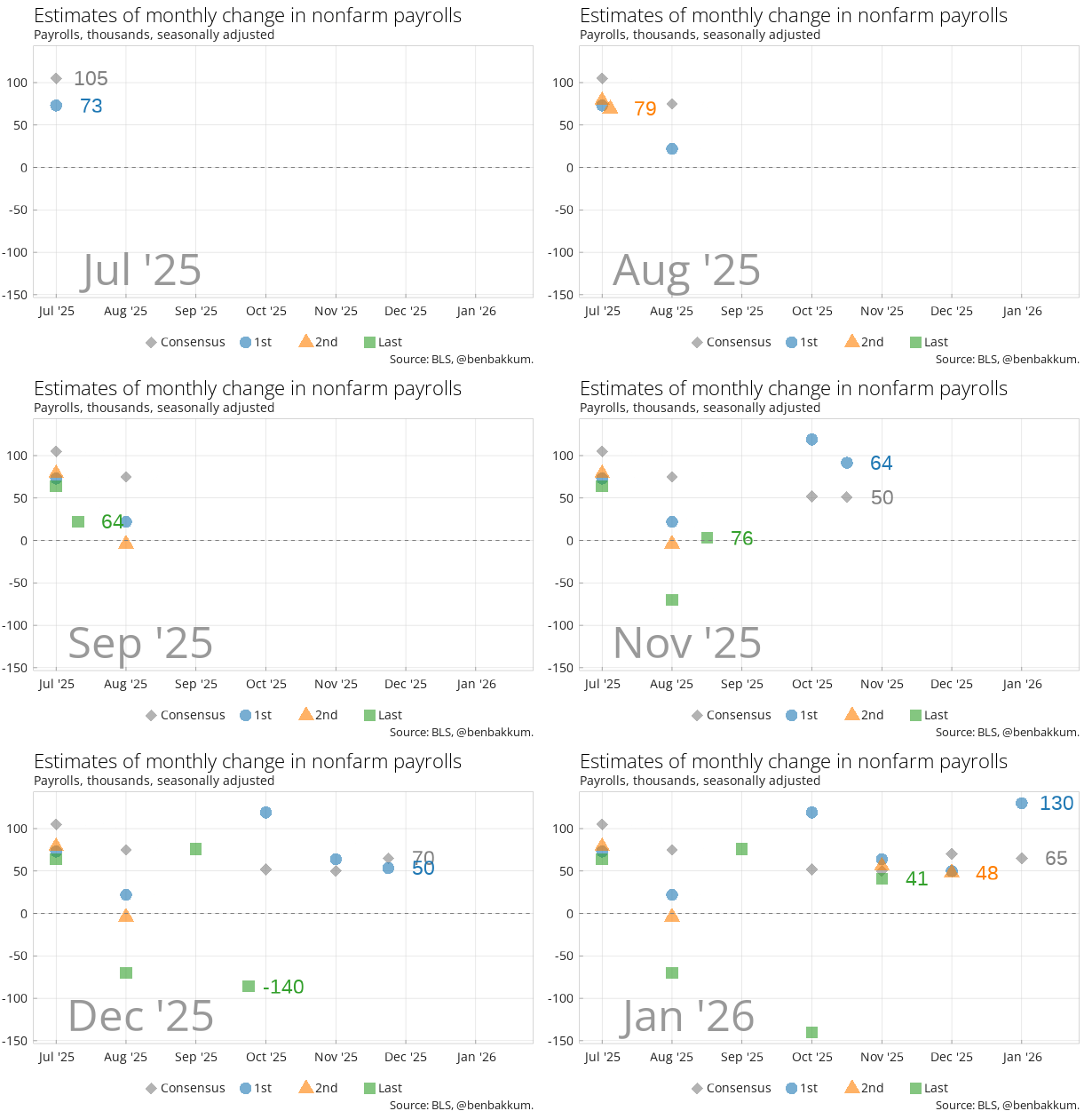
Job gains in January beat expectations, with gains of 130k jobs compared to a consensus estimate of about 70k. This was the strongest month of job growth since December 2024. The report also contained the annual benchmark revision to 2025 data, which revised total 2025 job gains from 584k to just 181k, implying an average of only 15k jobs per month last year.
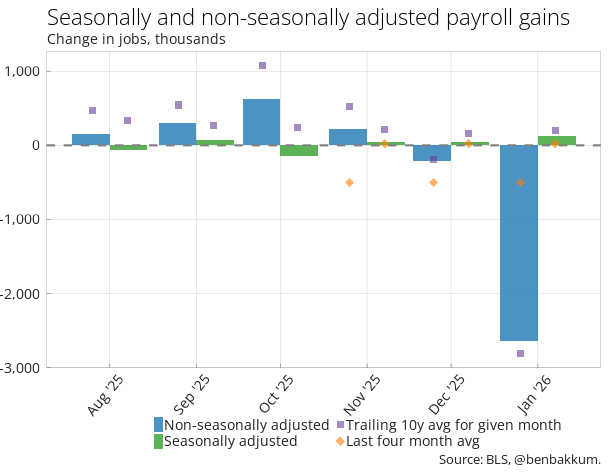
The actual net change in payrolls in January, without adjusting for seasonal effects, was a loss of over 2.5 million, still above the average of the last 10 Januaries. On a seasonally adjusted basis, January job gains were well above the recent trend, providing a welcome positive surprise.
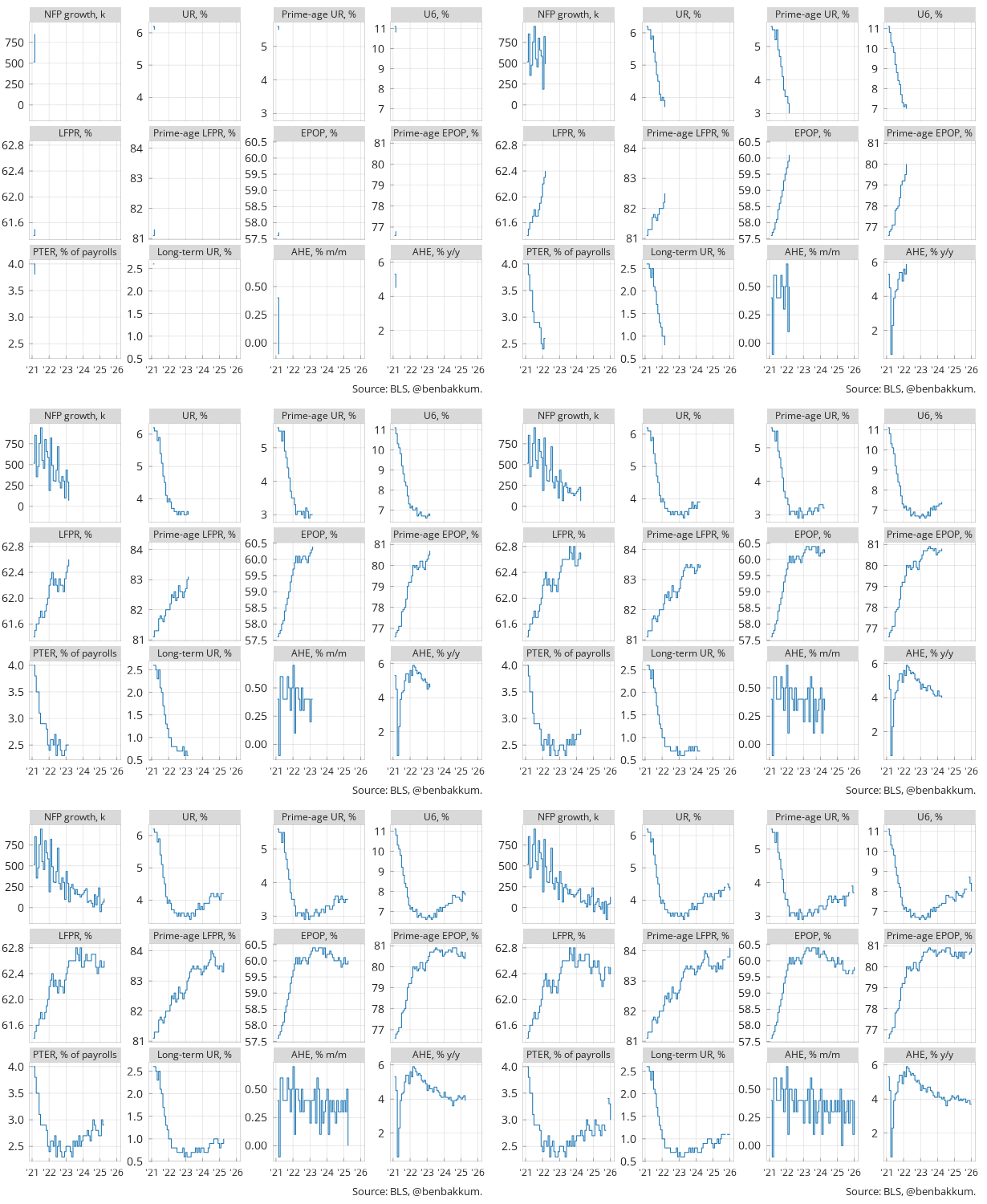
A quick guide to the table and charts below:
- NFP growth — the monthly change in total nonfarm payrolls, in thousands.
- UR — the unemployment rate, i.e. the share of people in the labor force who don’t have a job and are actively looking for one as a percentage of the labor force.
- UR — the prime-age unemployment rate, a UR 25-54 year olds, filtering out students and retirees. This to a large extent controls for changes in the UR due to demographic shifts.
- U6 — the broader unemployment measure that also includes people who are marginally attached to the labor market, having looked for a job in the last 12 months but not in the last four weeks, and people stuck in part-time jobs who want full-time work.
- LFPR — labor force participation rate, the share of the civilian population that is either working or looking for work.
- EPOP — the employment-to-population ratio. What share of the population has a job?
- PTER — part-time for economic reasons, people working part-time because they can’t find full-time work, as a share of total payrolls.
- Long-term UR — the share of unemployed workers who’ve been out of a job for 27 weeks or more.
- AHE — average hourly earnings. How much workers are getting paid per hour, shown both month-over-month and year-over-year.
Recent winter months have seen a nearly across the board firming in these various metrics.
| Jul-25 | Aug-25 | Sep-25 | Oct-25 | Nov-25 | Dec-25 | Jan-26 | |
|---|---|---|---|---|---|---|---|
| NFP growth, k | 64 | -70 | 76 | -140 | 41 | 48 | 130 |
| UR, % | 4.3 | 4.3 | 4.4 | 4.5 | 4.5 | 4.4 | 4.3 |
| Prime-age UR, % | 3.6 | 3.6 | 3.7 | 3.9 | 3.9 | 3.7 | 3.7 |
| U6, % | 7.9 | 8.1 | 8.1 | 8.7 | 8.7 | 8.4 | 8 |
| LFPR, % | 62.2 | 62.3 | 62.5 | 62.5 | 62.5 | 62.4 | 62.5 |
| Prime-age LFPR, % | 83.4 | 83.7 | 83.7 | 83.8 | 83.8 | 83.8 | 84.1 |
| EPOP, % | 59.6 | 59.6 | 59.7 | 59.6 | 59.6 | 59.7 | 59.8 |
| Prime-age EPOP, % | 80.4 | 80.7 | 80.7 | 80.6 | 80.6 | 80.7 | 80.9 |
| PTER, % of payrolls | 2.9 | 2.9 | 2.8 | 3.4 | 3.4 | 3.3 | 3 |
| Long-term UR, % | 1.1 | 1.1 | 1.1 | 1.1 | 1.1 | 1.1 | 1.1 |
| AHE, % m/m | 0.3 | 0.4 | 0.2 | 0.4 | 0.4 | 0.1 | 0.4 |
| AHE, % y/y | 4 | 4 | 3.8 | 3.9 | 3.9 | 3.7 | 3.7 |
| Source: BLS, @benbakkum. |
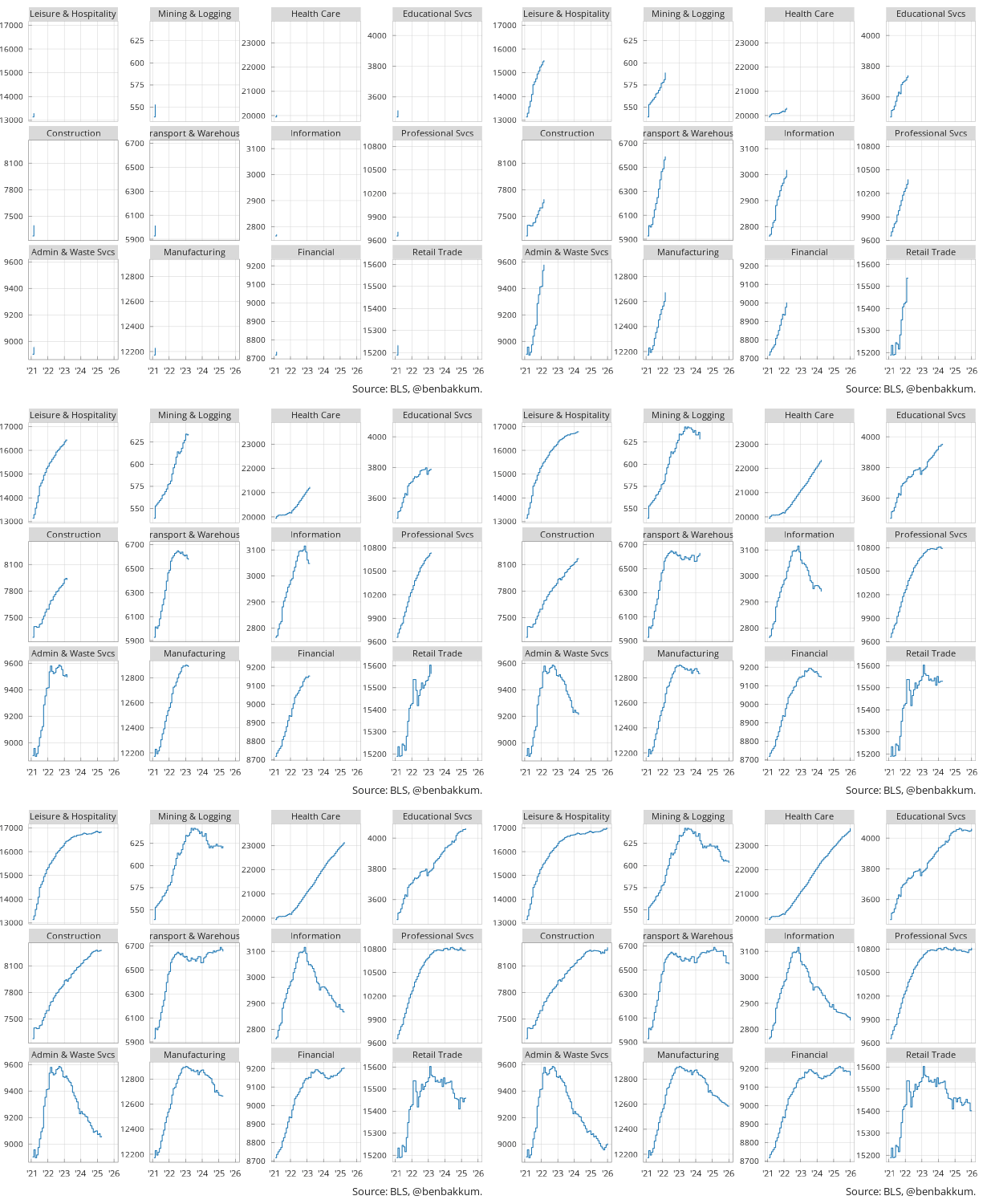
Looking at longer-term trends across industries, the post-pandemic labor market has been defined by a lopsided recovery. Health care and government have been the dominant drivers of job growth, while goods-producing sectors like manufacturing and mining have been flat to declining. Leisure and hospitality, which bore the brunt of pandemic layoffs, has largely recovered but job growth there has stalled. Information sector employment, which the BLS defines as publishing (including software), film and sound recording, broadcasting, telecom, and data processing, has trended lower since the over-hiring of the pandemic recovery.
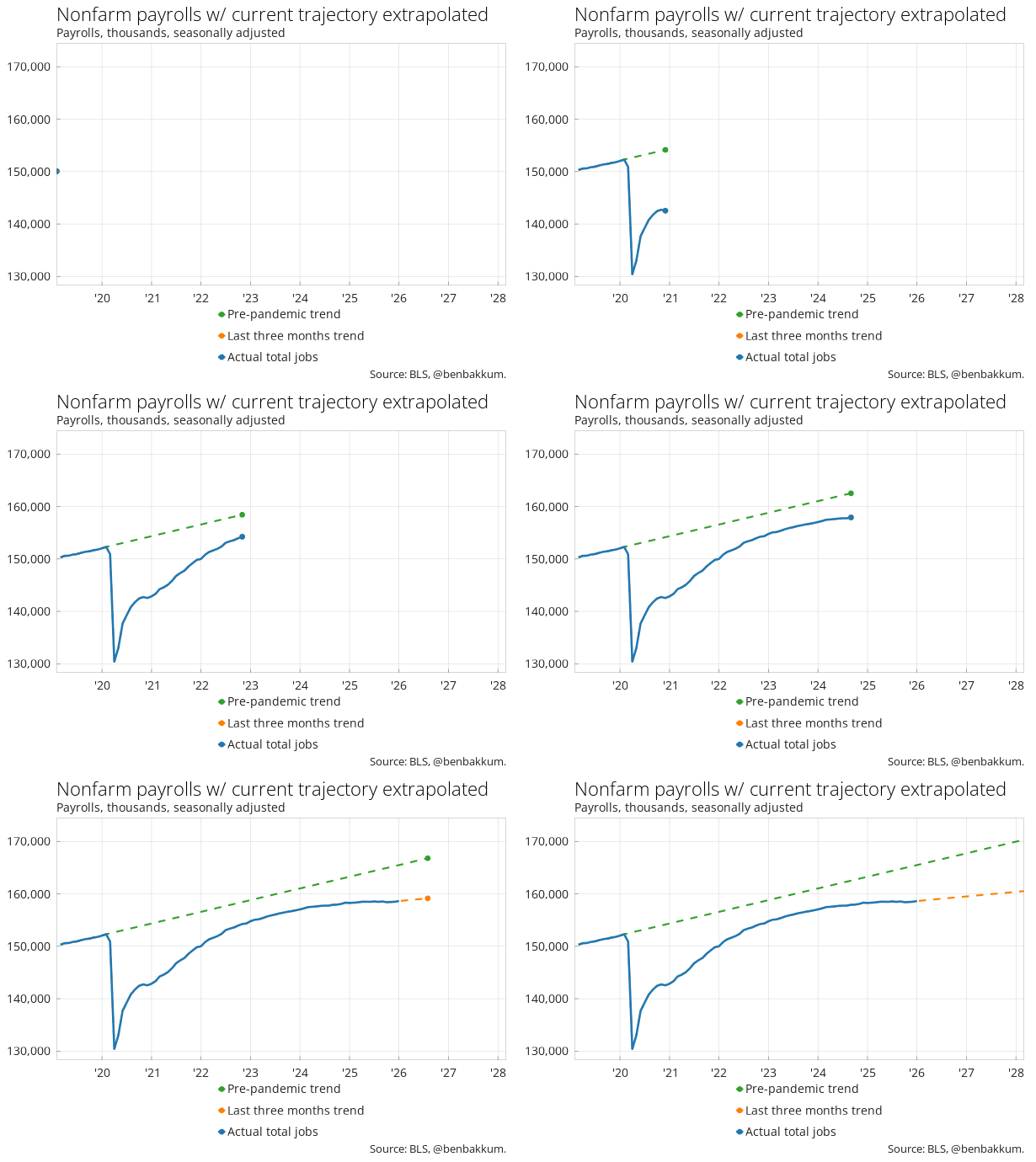
The flattish job growth of 2025 has widened the gap between current overall employment and levels in the unlikely case the pre-pandemic trend of job growth had continued.
An aggregate measure of labor market conditions, the Blanchflower-Levin employment gap, shows that tightness in the labor market has dissipated. Labor market “tightness,” or conversely “slack,” represents how close job market conditions are to what would be expected based on demographics, without either a glut of job opening or unemployed.
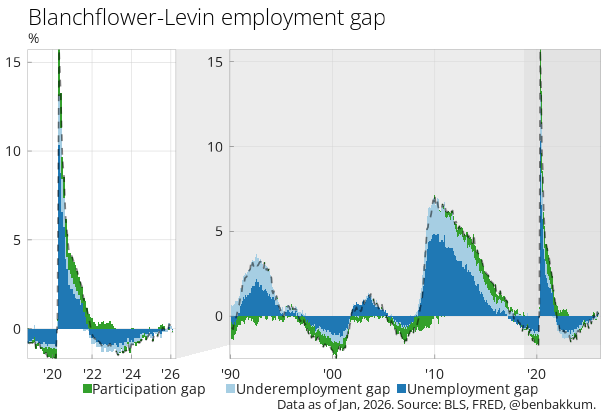
The various measures of tightness/slack above include:
- Unemployment gap — the difference between the unemployment rate and an estimate of the non-accelerating inflation rate of unemployment (NAIRU). NAIRU is a rough estimate of the level of unemployment that neither places upward or downward pressure on inflation.
- Participation gap — the difference between the labor force participation rate (LFPR) and the Congressional Budget Office’s estimate of the potential LFPR. The CBO’s “potential” version is their best guess at what that number should be given demographics (aging population, school enrollment etc). When actual participation falls below potential, it suggests there are people on the sidelines who would normally be in the workforce.
- Underemployment gap — the difference between the number of employees working part-time for economic reasons as a percentage of the labor force, adjusted for the difference in average hours worked by part-time and full-time employees, and the 1994-2007 average of this calculation.